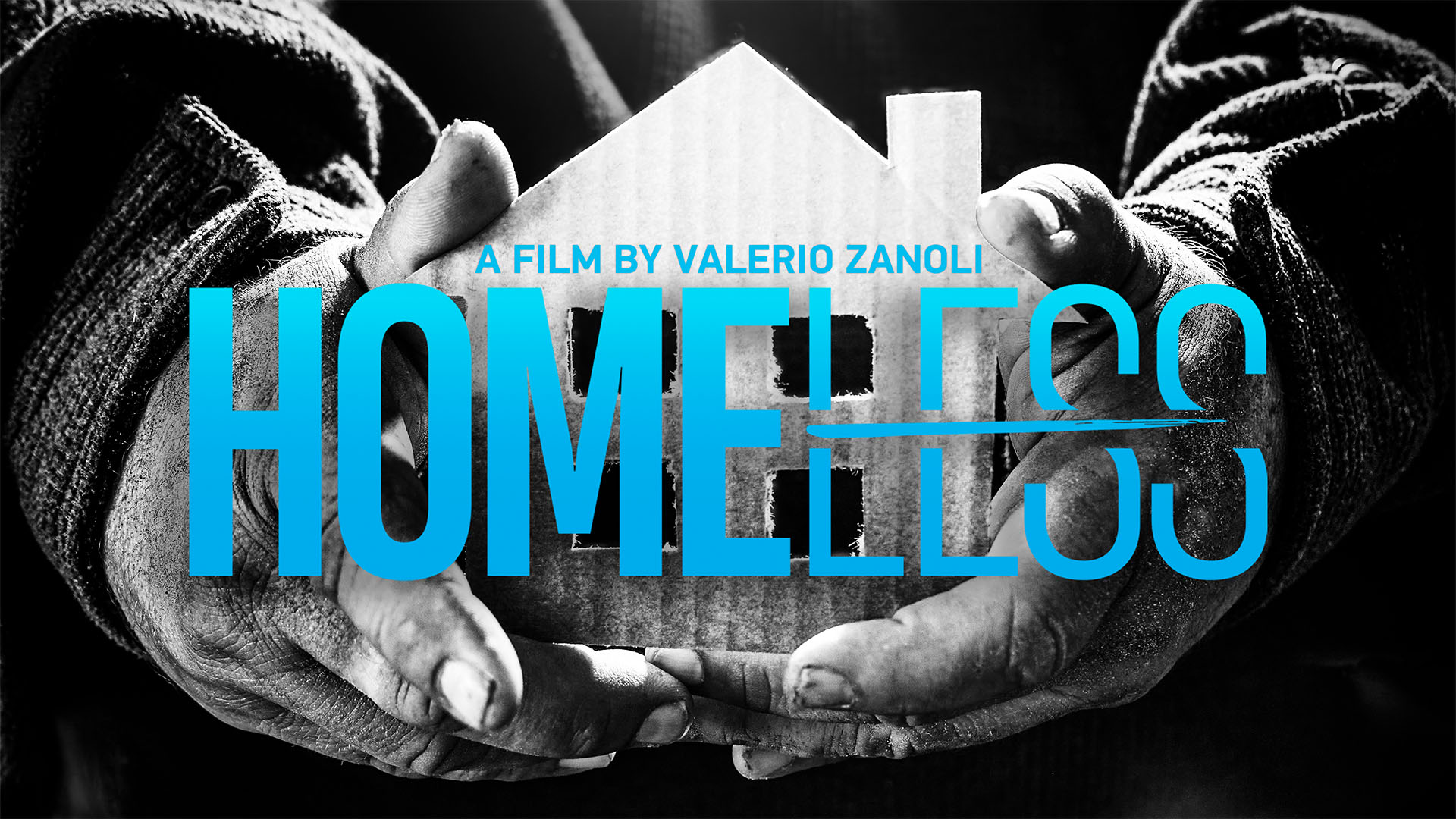
THE DOCUMENTARY “HOMELESS”
HOMELESS was produced to raise awareness and funds for an urgent social issue and global challenge that affect all of us as a society: On any given night, more than 700,000 people in the United States experience homelessness, while around the world the figure exceeds 100 million.

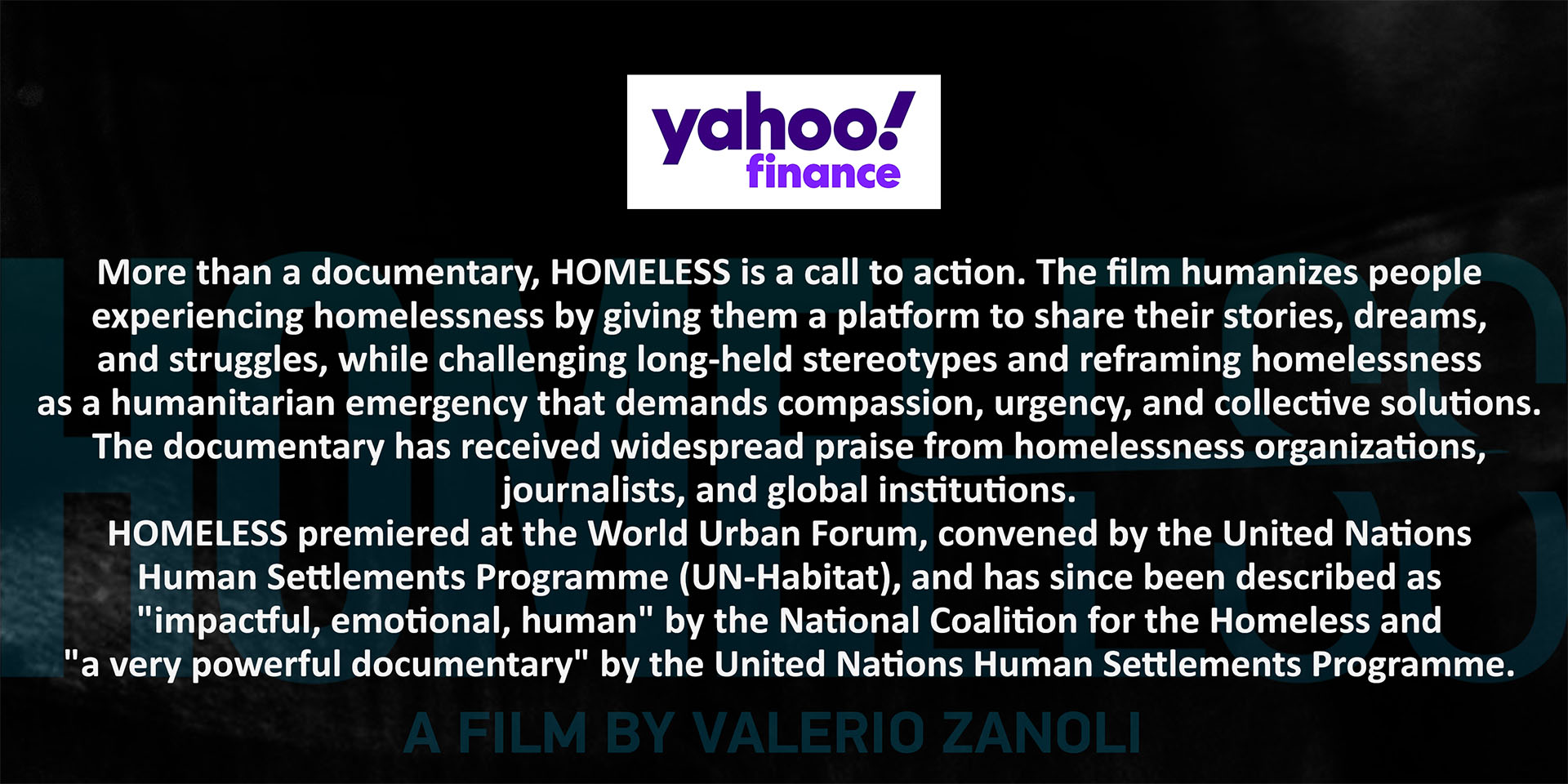
HOMELESS is not only a documentary, but also a powerful tool in the fight to end homelessness. The film has the support of the National Coalition for the Homeless and the United Nations Human Settlements Programme, which is using it to promote its World Urban Campaign and #HousingMatters Campaign.

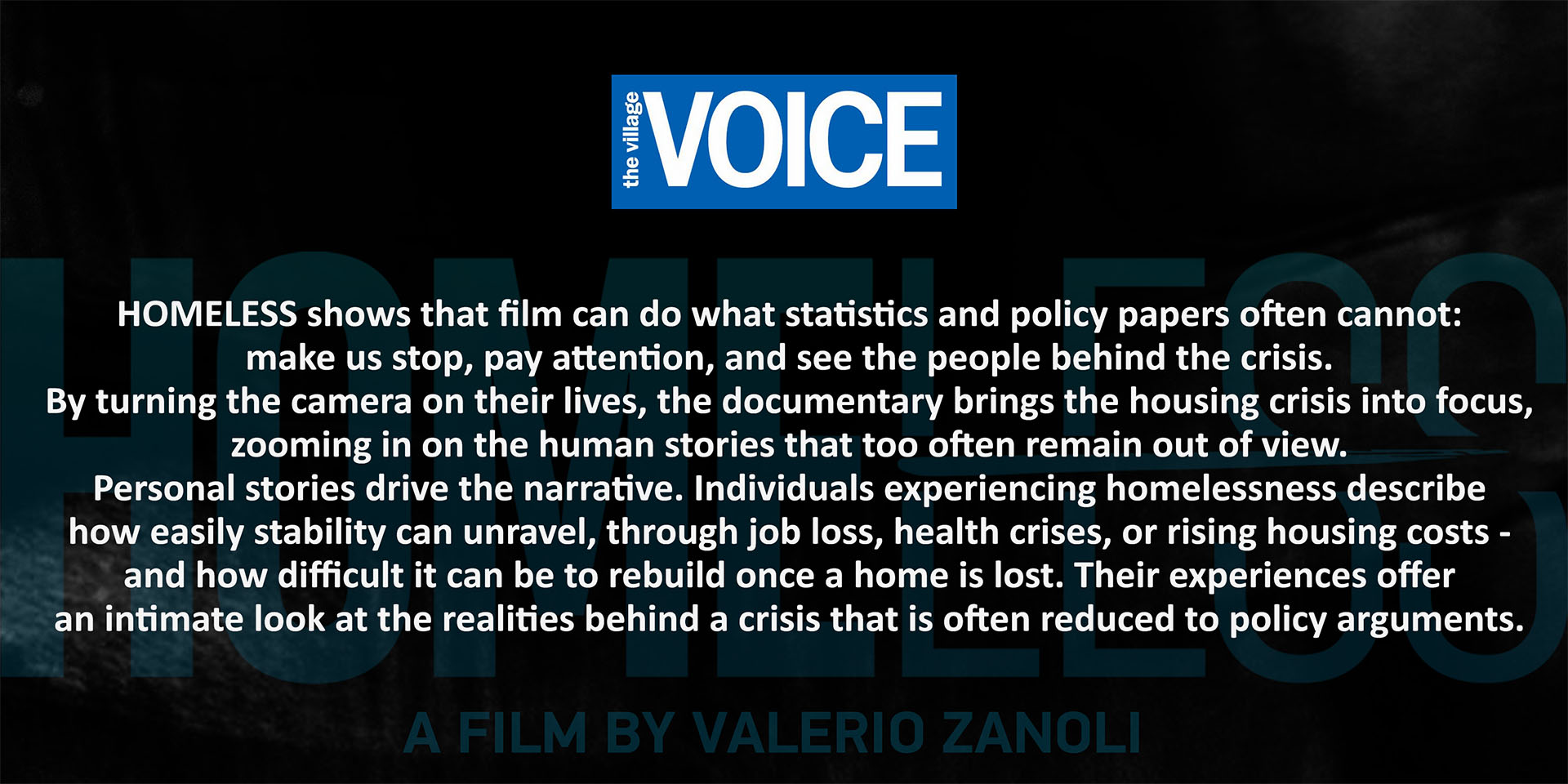
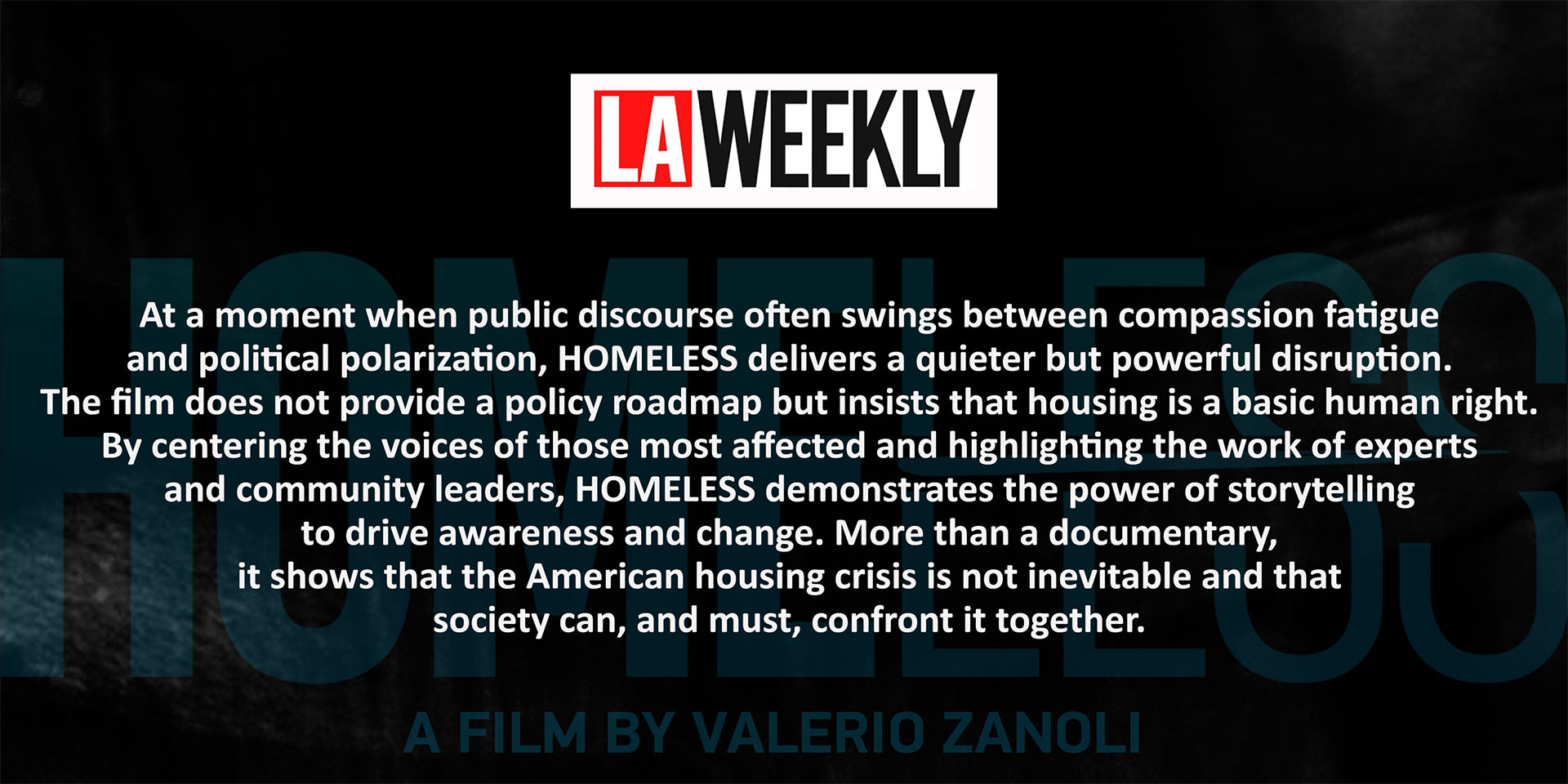
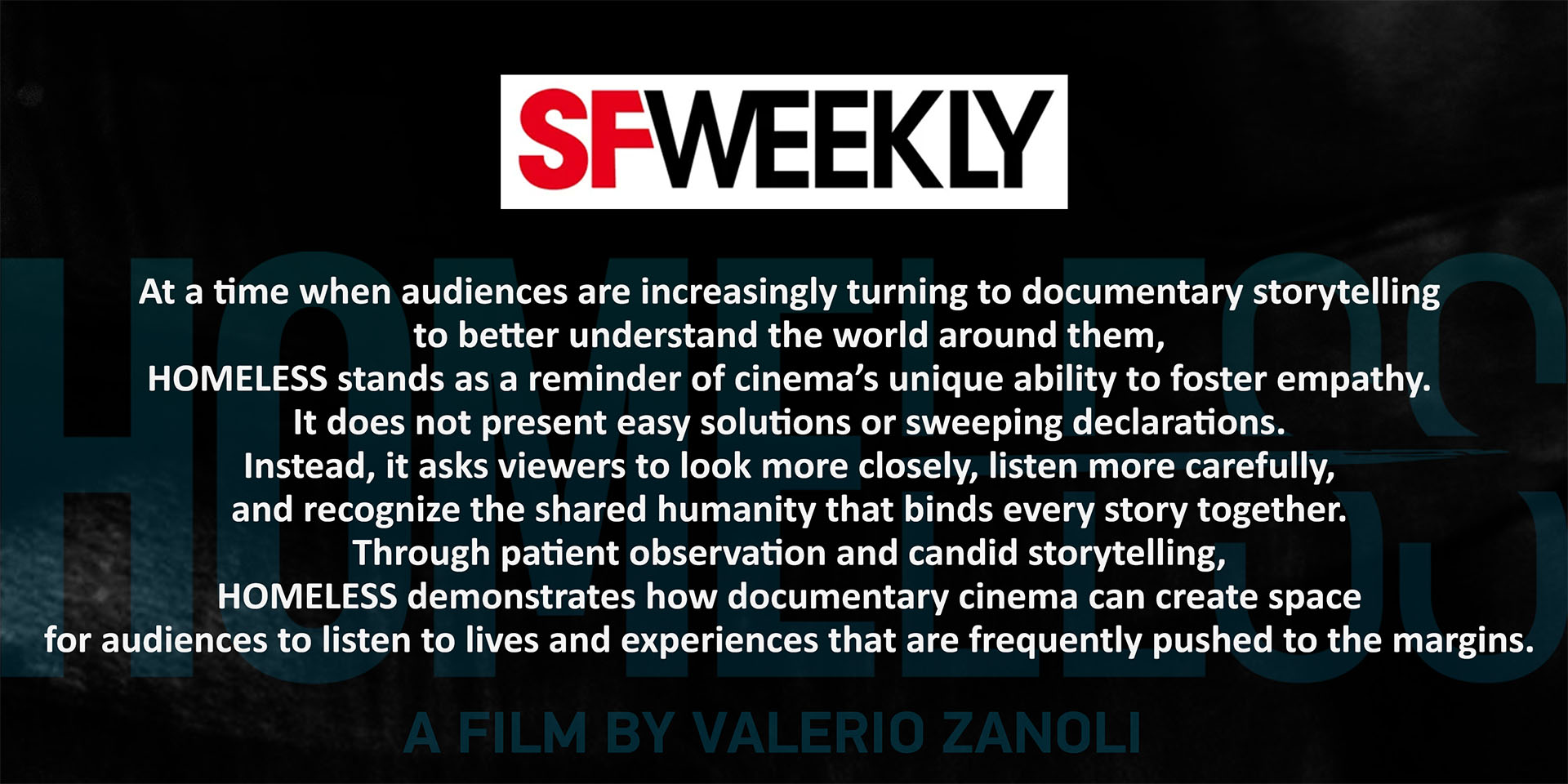
HOMELESS humanizes those who are often marginalized and overlooked by giving them a platform to share their experiences, dreams, and challenges in their quest for a place to call home. It strives to foster empathy and understanding, while also challenging viewers to reconsider how homelessness is perceived and addressed.

HOMELESS attracted the support of numerous homeless organizations, and it features segments with the mayors of Los Angeles and New York City, president Biden, the FBI director, the HUD secretary, etc. However, its main goal is to give homeless people a voice and explore their backgrounds, dreams, and struggles to find the way home.

Director Valerio Zanoli approached the project with the belief that homelessness is too often framed through cold headlines rather than human stories: Through HOMELESS, he aims to restore dignity and visibility for the unhoused, bring audiences closer to the individuals behind the issue, encourage viewers to truly see and acknowledge one another, and suggest that empathy is often the first step toward meaningful change.
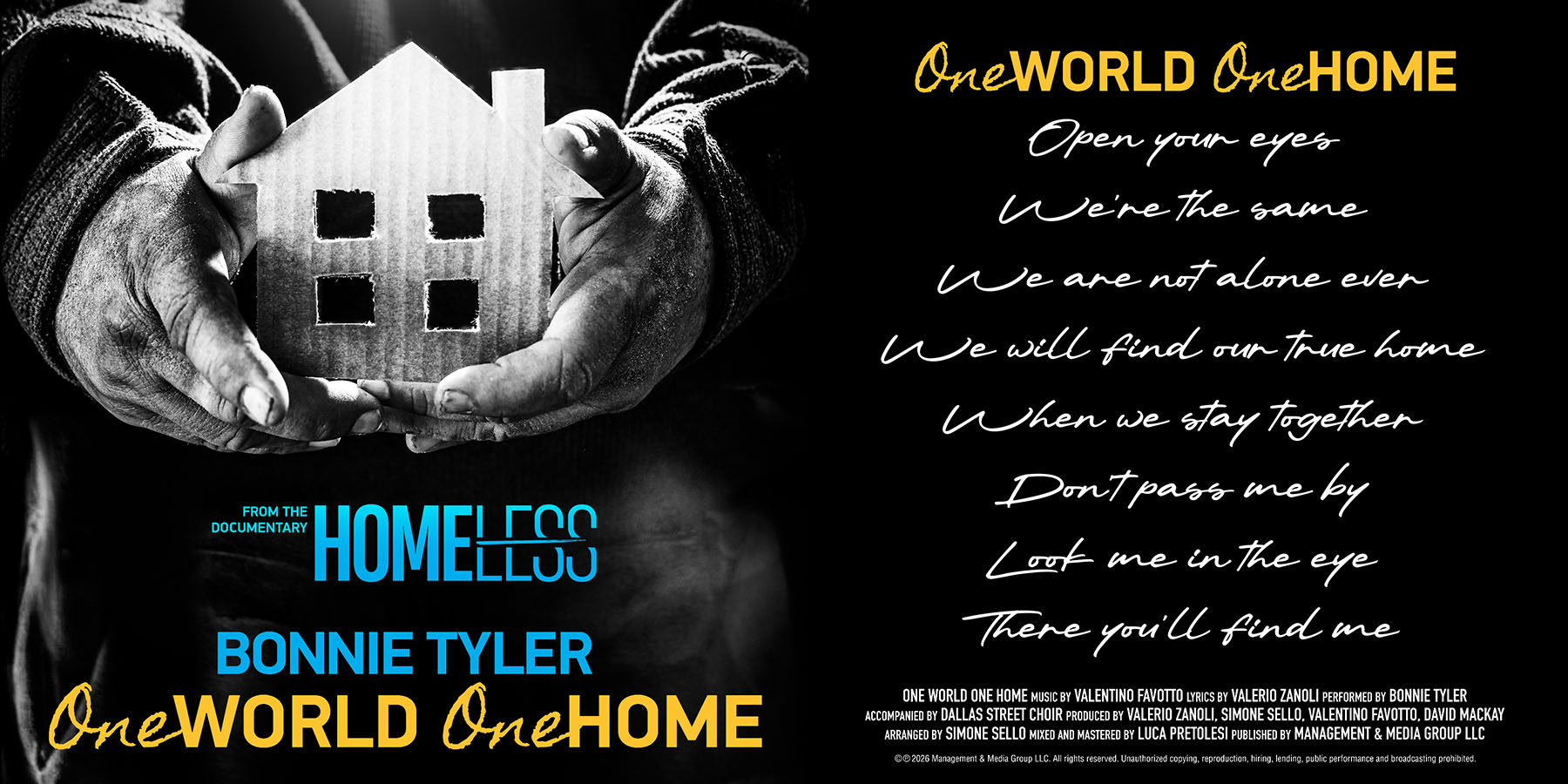
THE ORIGINAL SONG “ONE WORLD ONE HOME”
HOMELESS was produced to raise awareness and funds for an urgent social issue and global challenge that affect all of us as a society: On any given night, more than 700,000 people in the United States experience homelessness, while around the world the figure exceeds 100 million.

HOMELESS is not only a documentary, but also a powerful tool in the fight to end homelessness. The film has the support of the National Coalition for the Homeless and the United Nations Human Settlements Programme, which is using it to promote its World Urban Campaign and #HousingMatters Campaign.

HOMELESS humanizes those who are often marginalized and overlooked by giving them a platform to share their experiences, dreams, and challenges in their quest for a place to call home. It strives to foster empathy and understanding, while also challenging viewers to reconsider how homelessness is perceived and addressed.

HOMELESS attracted the support of numerous homeless organizations, and it features segments with the mayors of Los Angeles and New York City, president Biden, the FBI director, the HUD secretary, etc. However, its main goal is to give homeless people a voice and explore their backgrounds, dreams, and struggles to find the way home.

Director Valerio Zanoli approached the project with the belief that homelessness is too often framed through cold headlines rather than human stories: Through HOMELESS, he aims to restore dignity and visibility for the unhoused, bring audiences closer to the individuals behind the issue, encourage viewers to truly see and acknowledge one another, and suggest that empathy is often the first step toward meaningful change.
THE PROJECT “LET’S MAKE A DIFFERENCE”
HOMELESS was produced to raise awareness and funds for an urgent social issue and global challenge that affect all of us as a society: On any given night, more than 700,000 people in the United States experience homelessness, while around the world the figure exceeds 100 million.

HOMELESS is not only a documentary, but also a powerful tool in the fight to end homelessness. The film has the support of the National Coalition for the Homeless and the United Nations Human Settlements Programme, which is using it to promote its World Urban Campaign and #HousingMatters Campaign.

HOMELESS humanizes those who are often marginalized and overlooked by giving them a platform to share their experiences, dreams, and challenges in their quest for a place to call home. It strives to foster empathy and understanding, while also challenging viewers to reconsider how homelessness is perceived and addressed.

HOMELESS attracted the support of numerous homeless organizations, and it features segments with the mayors of Los Angeles and New York City, president Biden, the FBI director, the HUD secretary, etc. However, its main goal is to give homeless people a voice and explore their backgrounds, dreams, and struggles to find the way home.

Director Valerio Zanoli approached the project with the belief that homelessness is too often framed through cold headlines rather than human stories: Through HOMELESS, he aims to restore dignity and visibility for the unhoused, bring audiences closer to the individuals behind the issue, encourage viewers to truly see and acknowledge one another, and suggest that empathy is often the first step toward meaningful change.